| Slant Six Forum https://www.slantsix.org/forum/ |
|
| Roller Cams, the other aluminum head thread https://www.slantsix.org/forum/viewtopic.php?t=47333 |
Page 3 of 6 |
| Author: | Doc [ Fri Dec 23, 2011 11:46 am ] |
| Post subject: | |
I actually have a casting pattern to make roller cam blanks... and 4 casted blanks, 2 in 8630 and 2 in austemper cast iron. Once I found-out the gear hobber I use could not cut the gear in the center of the shaft, (after he said he could) the projects "died". It was during that time that I made the Nickel - Bronze OP drive gears, getting ready for the steel roller cams I was making. I recently hung one of those gears on my x-mas tree... a nice ornament so-to-speak. DD
|
|
| Author: | ceej [ Fri Dec 23, 2011 4:46 pm ] |
| Post subject: | |
Nice ornament! We'll have to see if OCG's guy can hob those gears for you! CJ |
|
| Author: | DusterIdiot [ Fri Dec 23, 2011 5:06 pm ] |
| Post subject: | Roller Cam as much as we know so far.... |
Quote: Does the Slant 6 use the same .904 lifters as the smallblock, or is the height different?
As long as they are mech roller lifters all is fine: big or small block on the .904 lifter bore. Hydro lifters no-go. That being said, the lifter you pick will need to have long "ears" to make sure the link bar has enough room to move in the slants tight lifter bay. You may also have to do a bunch of grinding to get the link to have clearance (they don't have this problem with the open valley on the V-8 ). If they are the same and the lifter spacing is the same, couldn't we use currently available smallblock lifters? One thing to note is mopar wasn't big on quality control on the engines so occasionally there are lifter bores that are not equal center to center on the occasional block, if your engine is one of these the captured link bar isn't going to work, and you will need to use a more expensive lifter that has the removable link bar with the slots in it (the mopar magnum lifter with the figure 8 link bar is too fat and would require a lot of work to try and make it fit right). Another couple of things to consider is your block prep as well if you are going to run this cam: I have figured I'm going to use a lifter bore tool to scratch the length of the bore so there is a drip of oil on the cam lobe to keep it lubed while in operation as insurance (comp cam has these for $100, I figure an enterprising person with an old lifter and a drill press might be able to make one with some scraps around the shop and a drill press. Another idea to comtemplate along with scoring the lifter bore would be to use Doc's Hydro motor trick and put some tall bushings in the lifter gallery drains so the valley has some standing oil to keep things lubed. It might also be somewhat beneficial to have the rear cam journal grooved instead of having them try to drill the oil holes in the blanks, this might also help keep oil going to the top end if the cam indexing is a bit off front to back. Another item to contemplate is the cam cannot 'walk' or it's all over (the roller wheels and needle bearings won't take the side loads)...A thrust button on the timing cover and some reinforcement to keep it stiff will help. I'd also be interested in finding a torrington bearing to be placed between the cam and the rear cam block plug to help keep in place if it walks the other way. Given the current melling pumps are coming with soft iron gears I figure that bronze gears wouldn't be needed as much, although I had stuffed away a couple of DG-404 iron gears for the distributor, the plastic gear would be fine for most applications unless this is going to be a all high rpm all the time ordeal. For the NA guy a roller cam isn't going to be a lot of help, the slant head is going to give diminishing returns on flow after about .550. This is why this cam is good for boost or for a well thought ram tuned intake, that way the profile allows for that radical quick max valve lift open, stays evenly open for a while while the cylinder is force fed, then the ramp slams the valve shut leaving little time to lose much on overlap like the ski ramp the mech lifter has. Personally I'd be curious if there was some cost savings if the blanks were made of ductile iron like the Buick GN roller cam blanks (cheaper material, a bit softer so it would save time and wear on tools during machining and grinding), this also might make it apealing for the 'street user'. I'd be in for one, but more like in April after the holiday season and current motor build stops draining my wallet.... -D.Idiot |
|
| Author: | ceej [ Sat Dec 24, 2011 10:06 pm ] |
| Post subject: | |
CNC-Dude, Are you going to work on hobbing gears on one of Doc's Blanks? Perhaps you can make one of your cams for testing. Doc would likely be a great candidate. He's got the weather and lot's of rolling stock to test with. My car won't be together before June, and the Hooptie is pickled for winter. CJ |
|
| Author: | Charrlie_S [ Sun Dec 25, 2011 5:41 am ] |
| Post subject: | |
Question: If you are willing to spend about $1,000 for a roller cam setup, why even bother with the gear on the cam? Just use a crank driven external oil pump, and crank trigger DIS ignition. I just cannot see using a roller cam on anything less then a max effort race motor. |
|
| Author: | CNC-Dude [ Sun Dec 25, 2011 10:35 am ] |
| Post subject: | |
Well Ceej, that would be a real good way to get some R&D done quickly if Doc wanted to do some testing. Also, there are many additional benefits to using a roller(hydraulic or solid) other than just maximum effort racing. Many think that, but even if you had a roller ground to replace a existing flat tappet cam and made it have the same lift, duration and L/C angles, the roller camshaft would always produce more power simply from the friction losses alone, and the opening and closing ramps on a roller cam lobe will always be much faster than even a flat tappet of more lift or duration. This is greatly benefical to engines that have below par flow characteristics such as the Slant's head, even when fully ported. Yes, the cost to upgrade to a roller cam, whether its hydraulic or solid can be prohibitive to many, but the gains will always offset that cost. Why have most all of the US car manufacturers made rollers the standard in all production engines, when the flat tappets had been the norm for close to 100 years. It surely costs much more to produce them that way....but the gains in reliability, maintenance and other areas offset it in the long run! |
|
| Author: | ceej [ Sun Dec 25, 2011 10:52 am ] |
| Post subject: | |
One of the primary drivers was to remove metals from motor oil for emissions reasons unless I've been sadly missinformed. I still cringe when "recycled oil" people talk about burning used motor oil in diesel engines. The toxic crud coming out of those tail pipes is a serious health hazard. A roller doesn't require the same EP support that a flat tappet does. Metals were the easiest and cheapest way to provide flat tappet lubrication for years. The benefit of much more agressive ramp rates with the roller is definitely a bonus! We'll have to see if we can talk Doug into experimenting a bit. Here, let me twist his arm a bit! Have you got time to play with this Doc? CJ |
|
| Author: | Charrlie_S [ Sun Dec 25, 2011 12:03 pm ] |
| Post subject: | |
Quote: Many think that, but even if you had a roller ground to replace a existing flat tappet cam and made it have the same lift, duration and L/C angles, the roller camshaft would always produce more power simply from the friction losses alone, and the opening and closing ramps on a roller cam lobe will always be much faster than even a flat tappet of more lift or duration. This is greatly benefical to engines that have below par flow characteristics such as the Slant's head, even when fully ported.
I agree
Quote: Yes, the cost to upgrade to a roller cam, whether its hydraulic or solid can be prohibitive to many, but the gains will always offset that cost.
The gains may or may not offset the cost. Particually on our engines.I do not think a street car or moderate race car, can justify a $1,000 cost. Quote:
Why have most all of the US car manufacturers made rollers the standard in all production engines, when the flat tappets had been the norm for close to 100 years. It surely costs much more to produce them that way....but the gains in reliability, maintenance and other areas offset it in the long run!
Mainly because of government regulations about fuel economy and emissions.
|
|
| Author: | CNC-Dude [ Sun Dec 25, 2011 4:18 pm ] |
| Post subject: | |
Ceej, I think there are enough guys here that we can collectively pool resources and talent to pull this off. I wouldn't have any problem providing a billet core to hand off to Doc to have finish ground to correspond to his engine components. But, DI pointed out some solid valid issues that still need to be addreesed, like which lifters to actually use and the thrust button issue. The Ford and Chevy inline 6's both use thrust plates to retain and limit the cams forward movement, so that could also provide a solution and be relatively easy to make and install on the block without a lot of hassle. Charrlie also made an observation that would make the billets easier to make and that is to eliminate the oil pump drive gear completely and use a crank driven setup. That would take a big obstacle out of making the billets right there, but again, this mod wouldn't be for everyone. Currently you can buy a piece of 8620 long enough to make a cam blank out of for less than $25.00 bucks, so the material cost is pretty reasonable to get you started. |
|
| Author: | wicked/six [ Sun Dec 25, 2011 4:44 pm ] |
| Post subject: | |
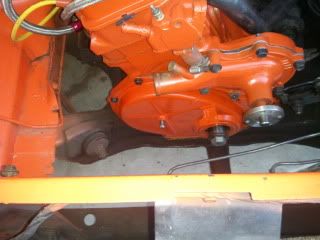
![]() The cam button is really simple, don't see that being a big deal. I'll be intrested in one but at the moment money is tight with cristmas and all!! TF |
|
| Author: | DusterIdiot [ Sun Dec 25, 2011 9:45 pm ] |
| Post subject: | Not really... |
Quote: The cam button is really simple, don't see that being a big deal.
Being a career tin knocker, that works, but the two timing covers I have modded using Doc's trick, do flex if the cam walks forward (and "pucker" if you tighten too much), the cover is pretty thin and needs more than the stock 'bead'/fold to keep it slightly stiff. Sadly there isn't a lot of room between the cover and the double row gear to get a peice of 16 ga welded in to provide one good transverse strip of 'stiffener' (and the cover would warp under the heat to weld the thicker metal onto it without a 'jig'. Things are slow at work and I've been doodling an idea for an external bolt on stiffener that would provide the backing to keep the timing cover from puckering when loaded.-D.Idiot |
|
| Author: | xjarhead [ Thu Dec 29, 2011 11:07 pm ] |
| Post subject: | |
Billet timing cover with cam button built in. Can you say CHA CHING$$$ Dave |
|
| Author: | wicked/six [ Fri Dec 30, 2011 2:14 am ] |
| Post subject: | Re: Not really... |
Quote: Being a career tin knocker, that works, but the two timing covers I have modded using Doc's trick, do flex if the cam walks forward (and "pucker" if you tighten too much), the cover is pretty thin and needs more than the stock 'bead'/fold to keep it slightly stiff. Sadly there isn't a lot of room between the cover and the double row gear to get a peice of 16 ga welded in to provide one good transverse strip of 'stiffener' (and the cover would warp under the heat to weld the thicker metal onto it without a 'jig'. Things are slow at work and I've been doodling an idea for an external bolt on stiffener that would provide the backing to keep the timing cover from puckering when loaded. -D.Idiot |
|
| Author: | ceej [ Fri Dec 30, 2011 9:13 am ] |
| Post subject: | |
My pump drive will solve that. The rear will require a bearing. CJ |
|
| Author: | Fopar [ Fri Dec 30, 2011 9:27 am ] |
| Post subject: | |
tristan the oil pressure on the rear bearing (cam) will have some effect. The hole in the cams rear journal is there to bleed off pressure. Richard |
|
| Page 3 of 6 | All times are UTC-07:00 |
| Powered by phpBB® Forum Software © phpBB Limited https://www.phpbb.com/ |
|